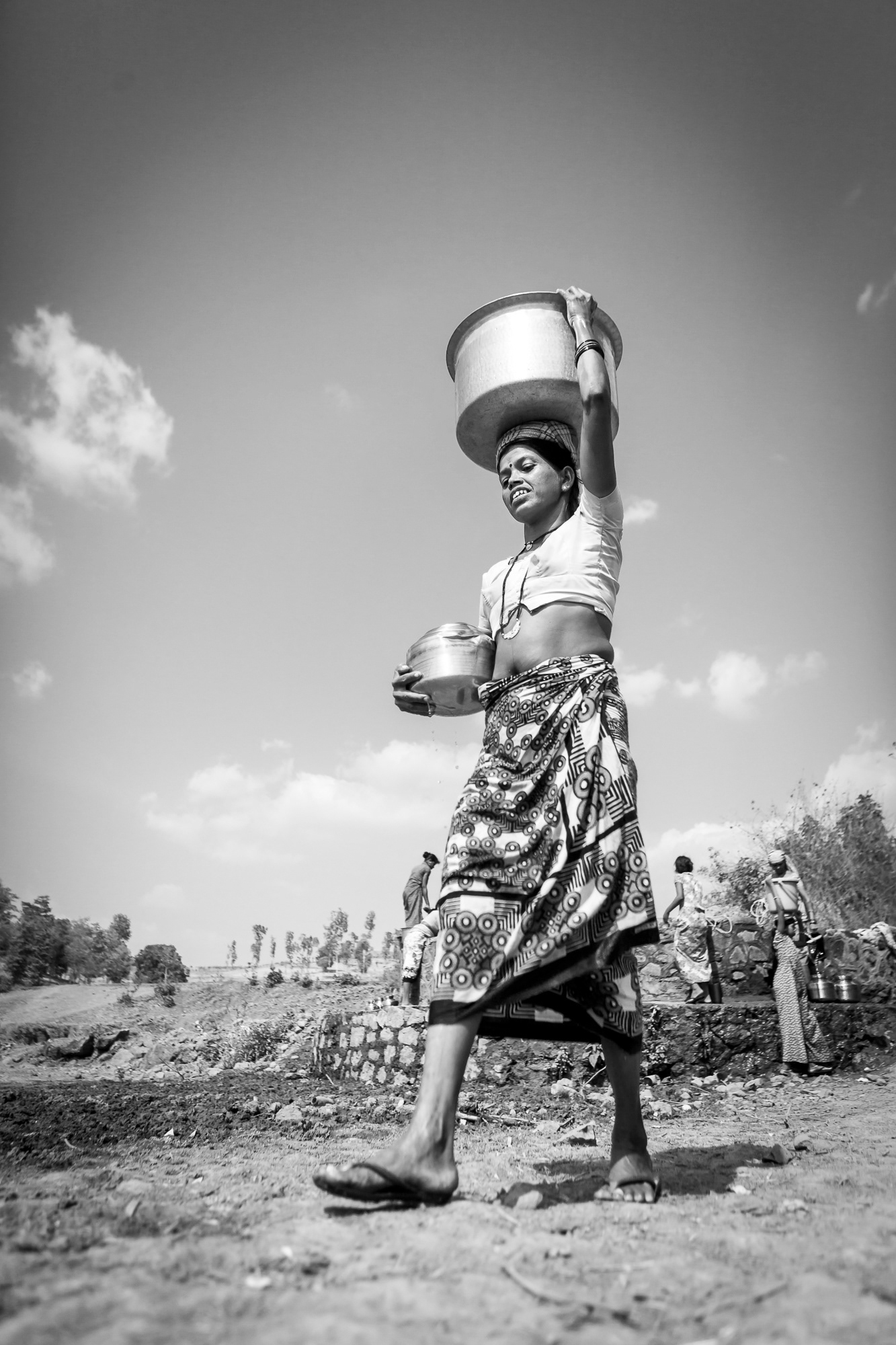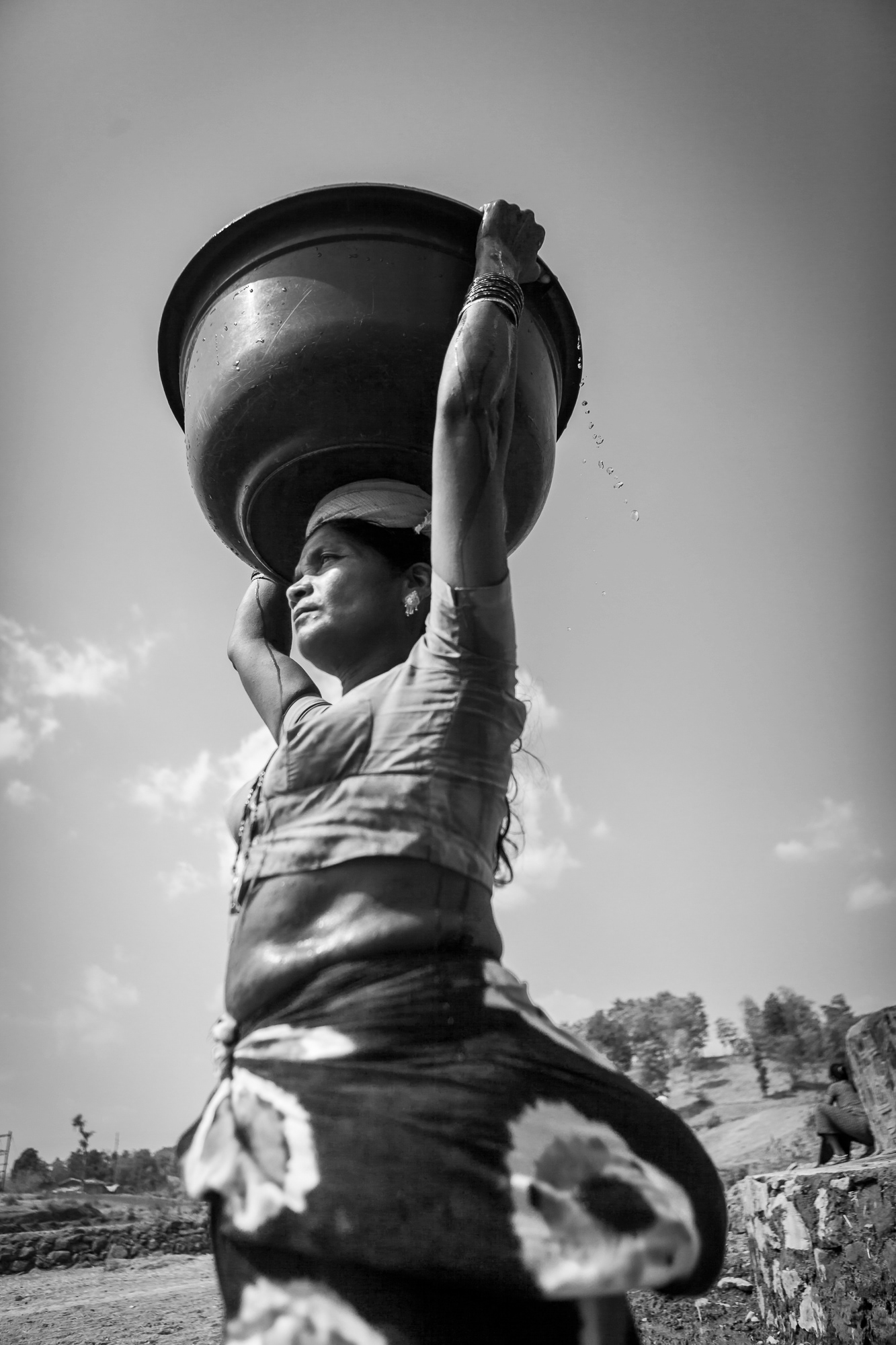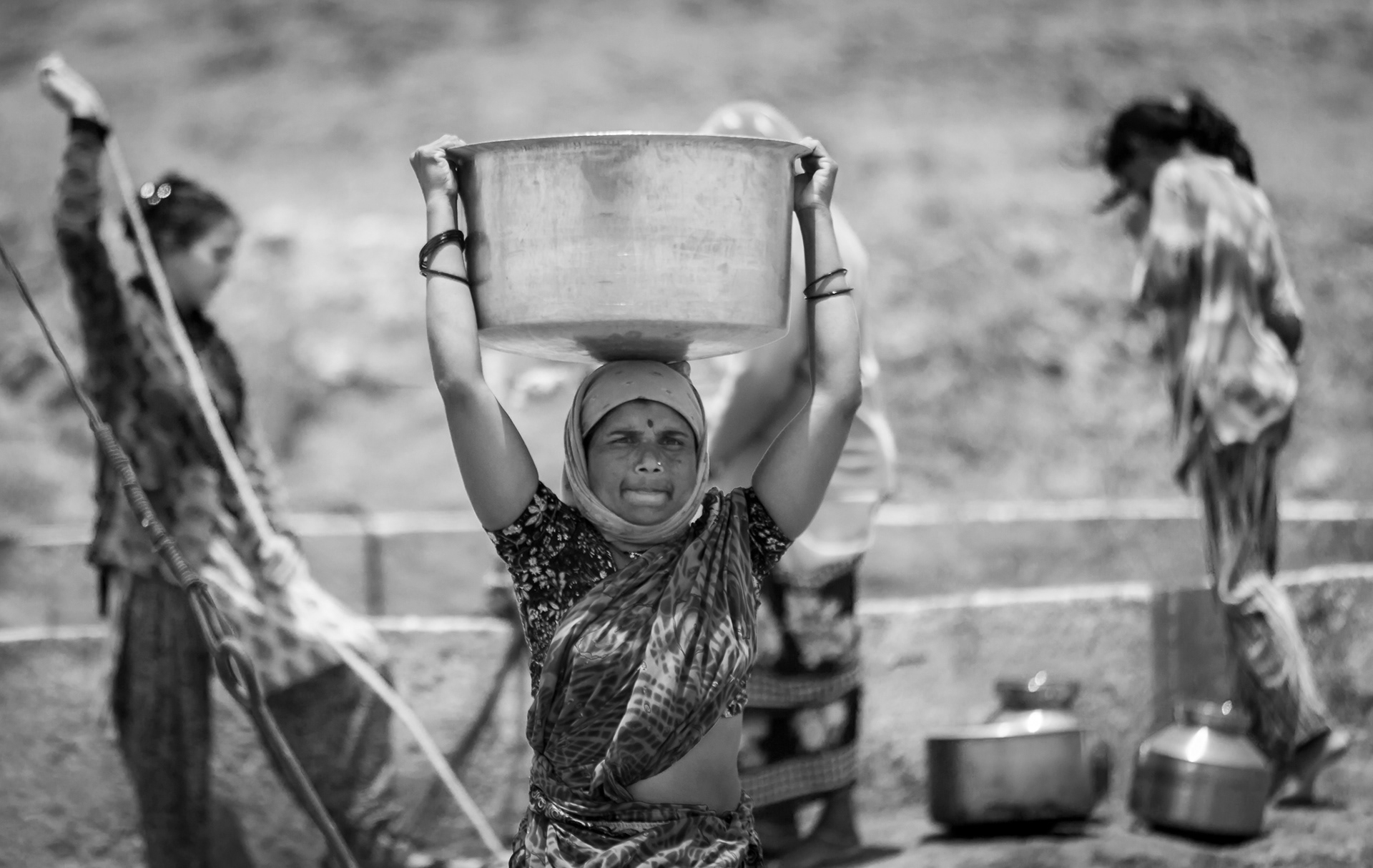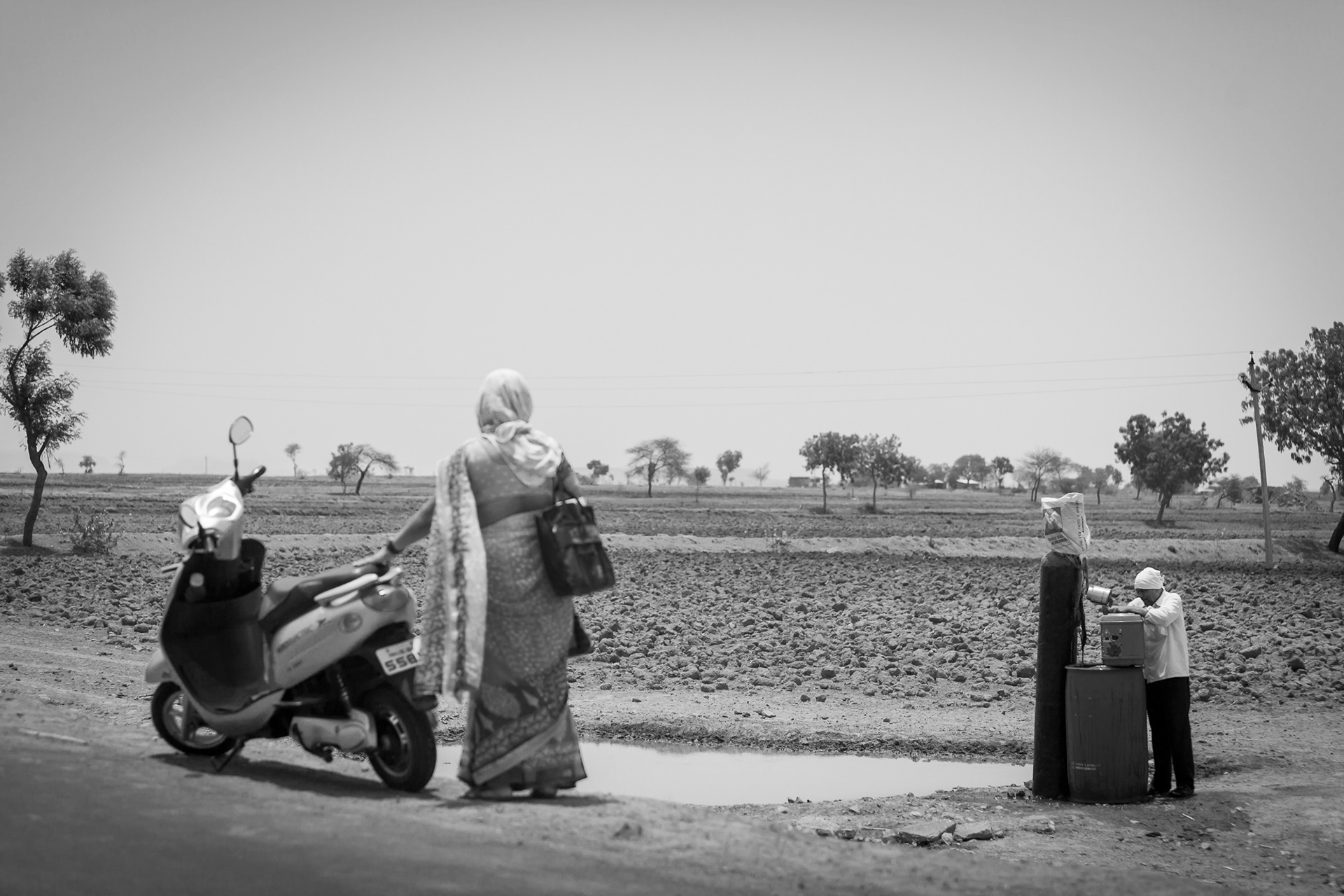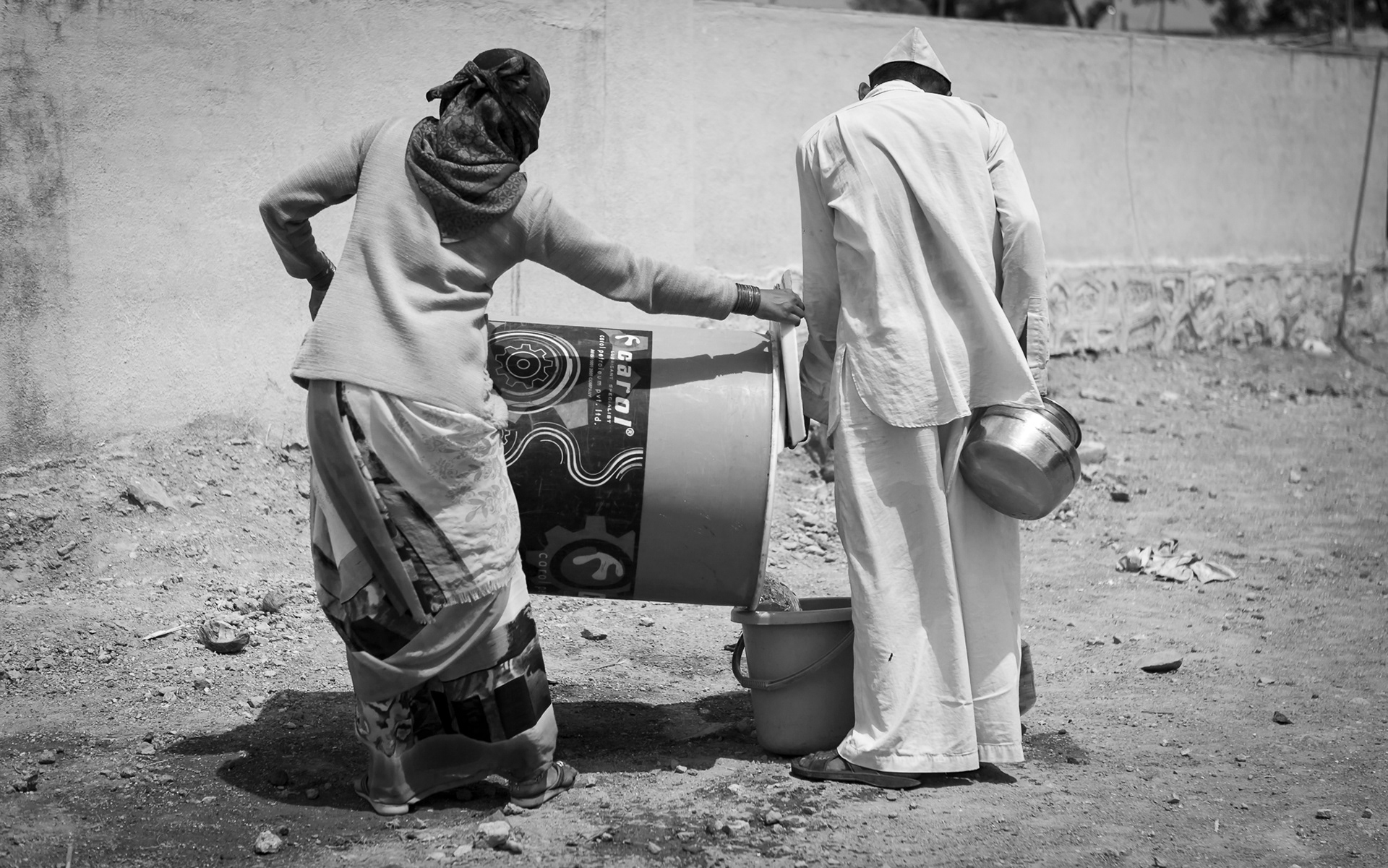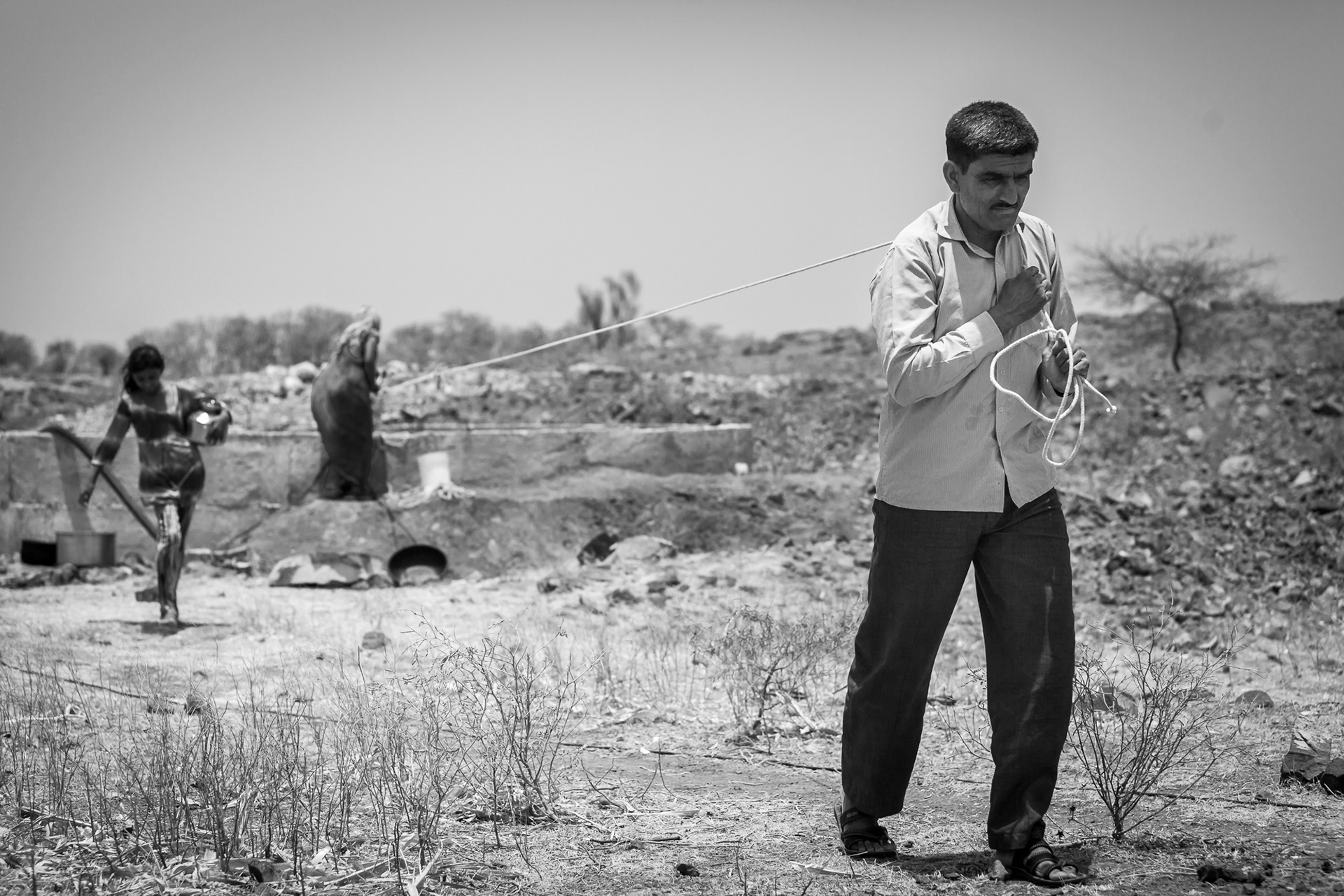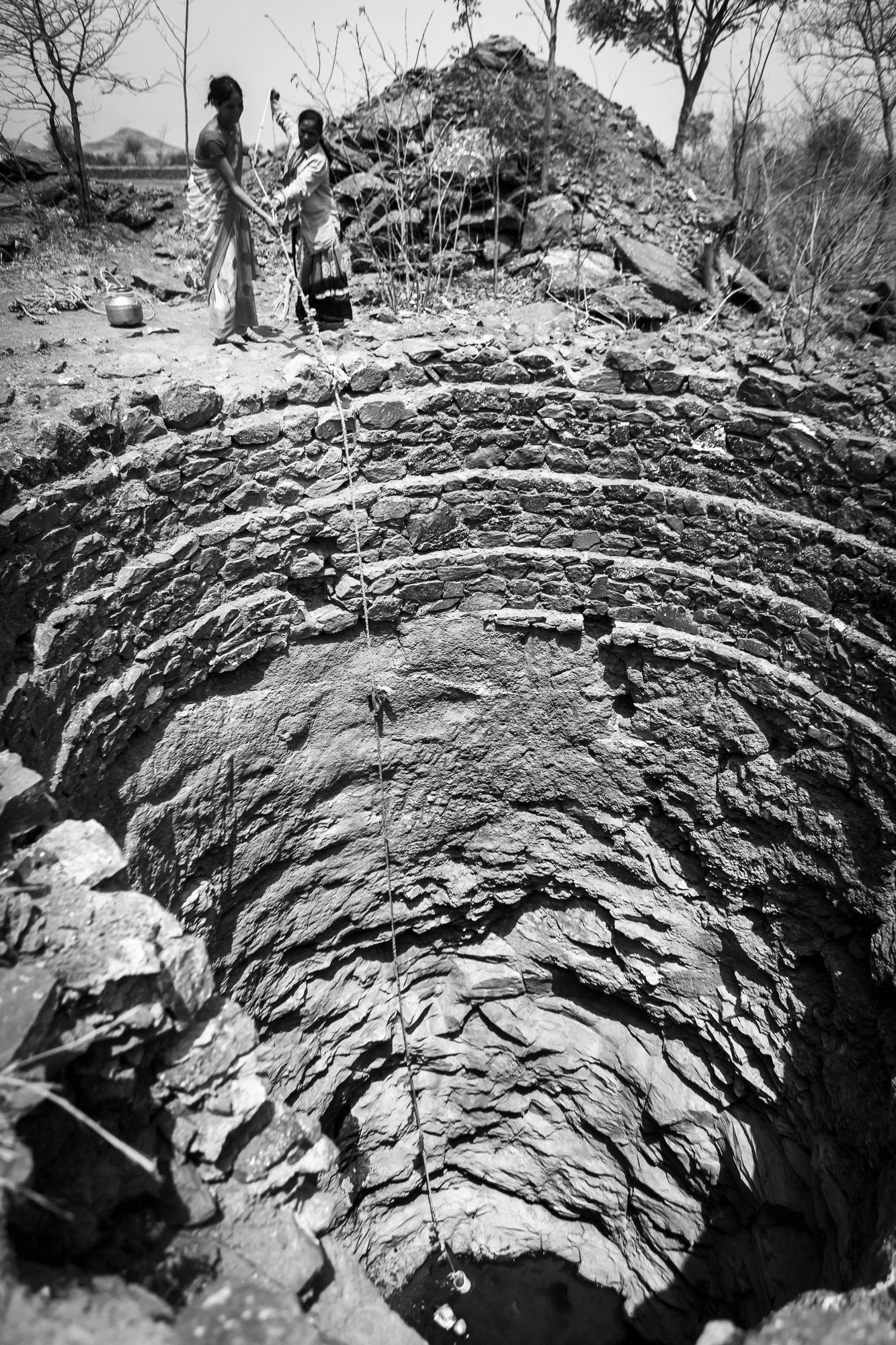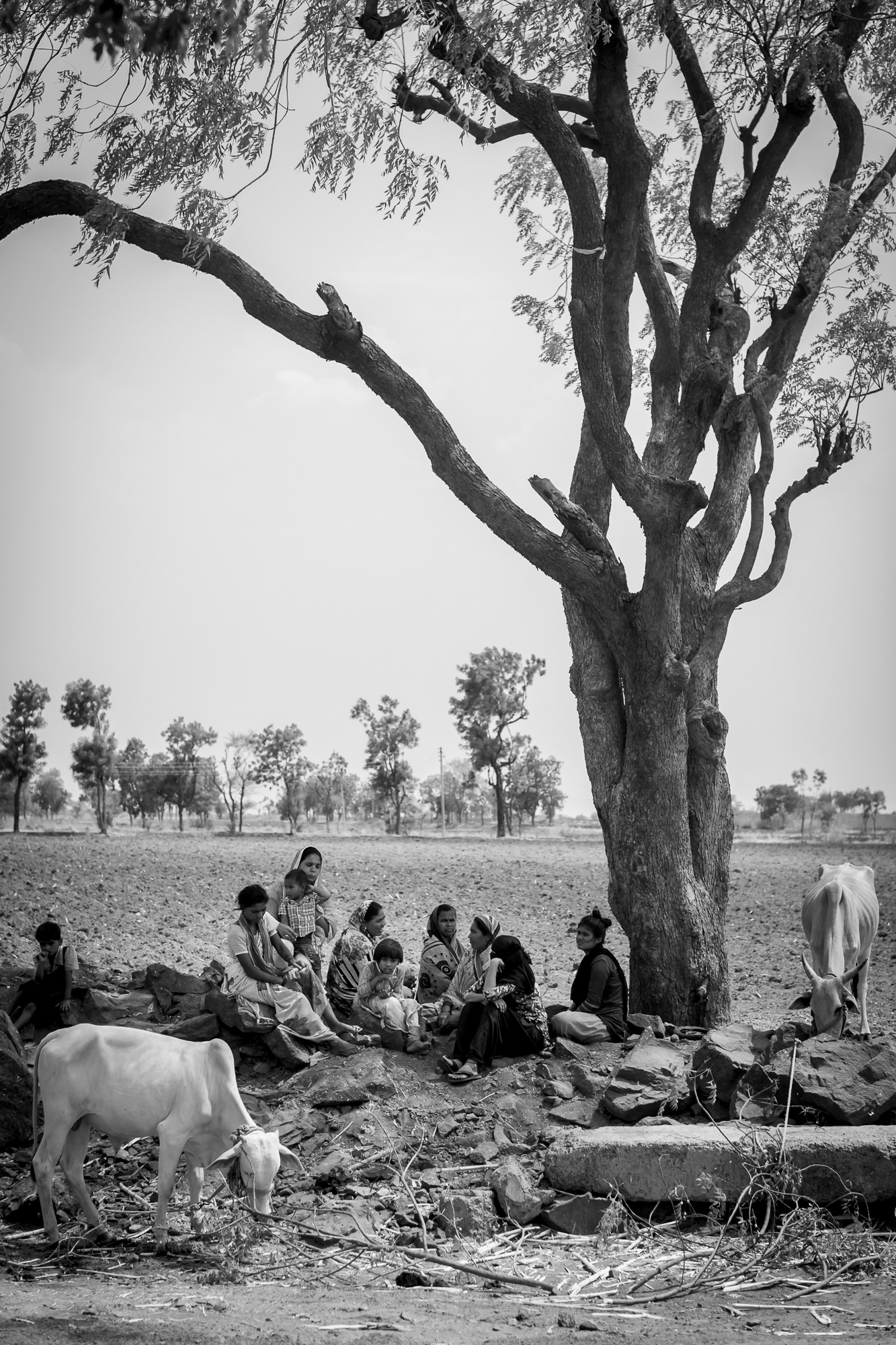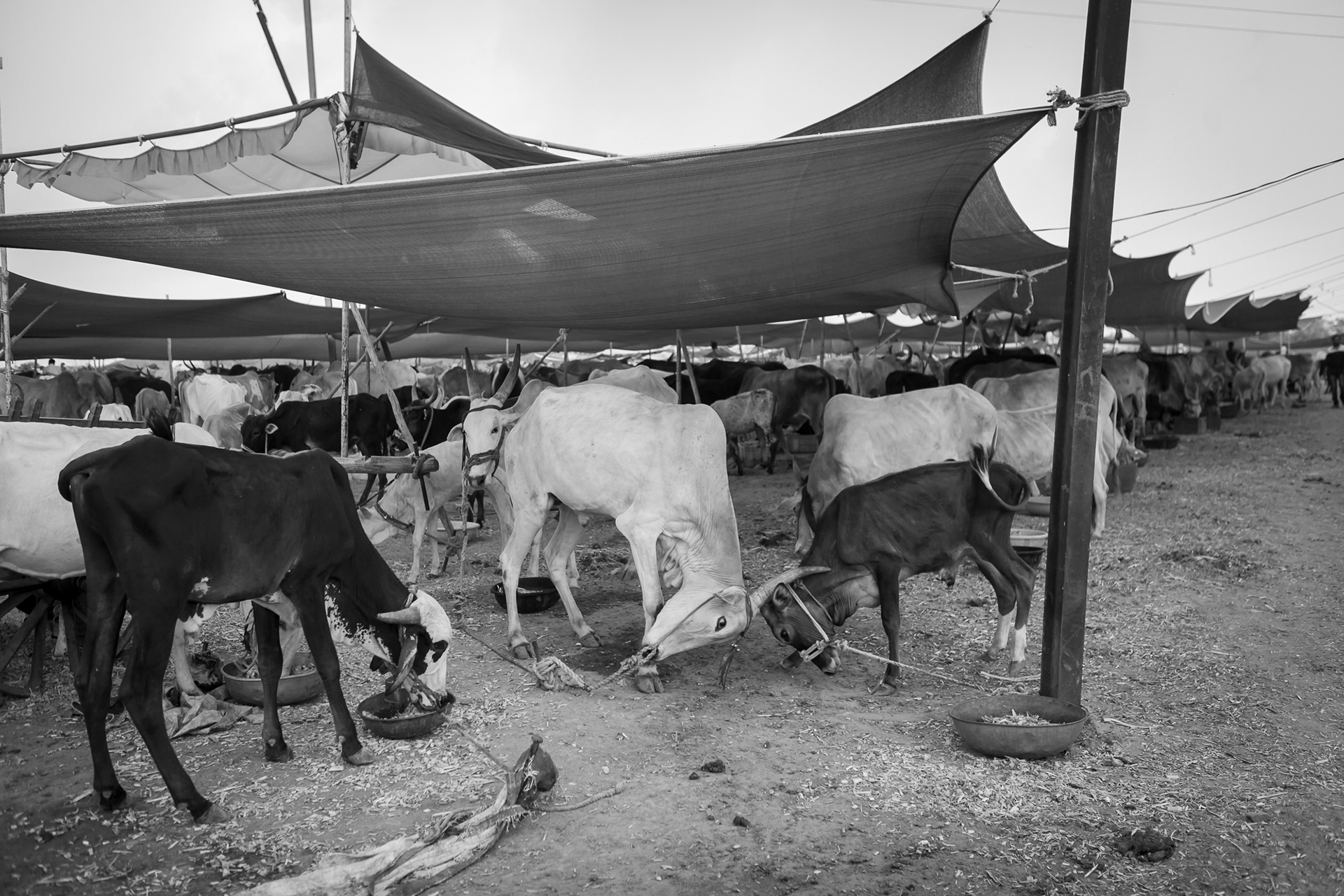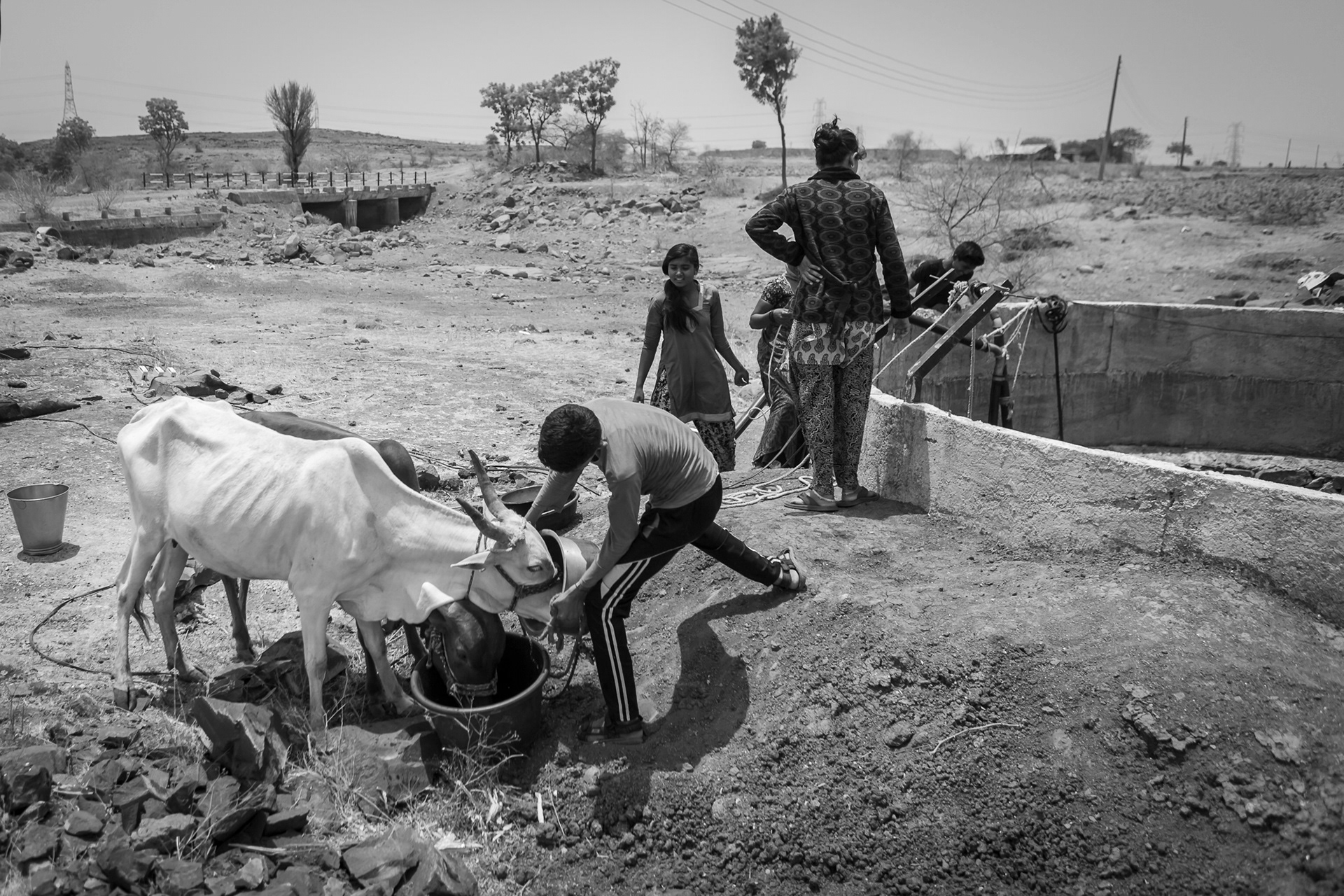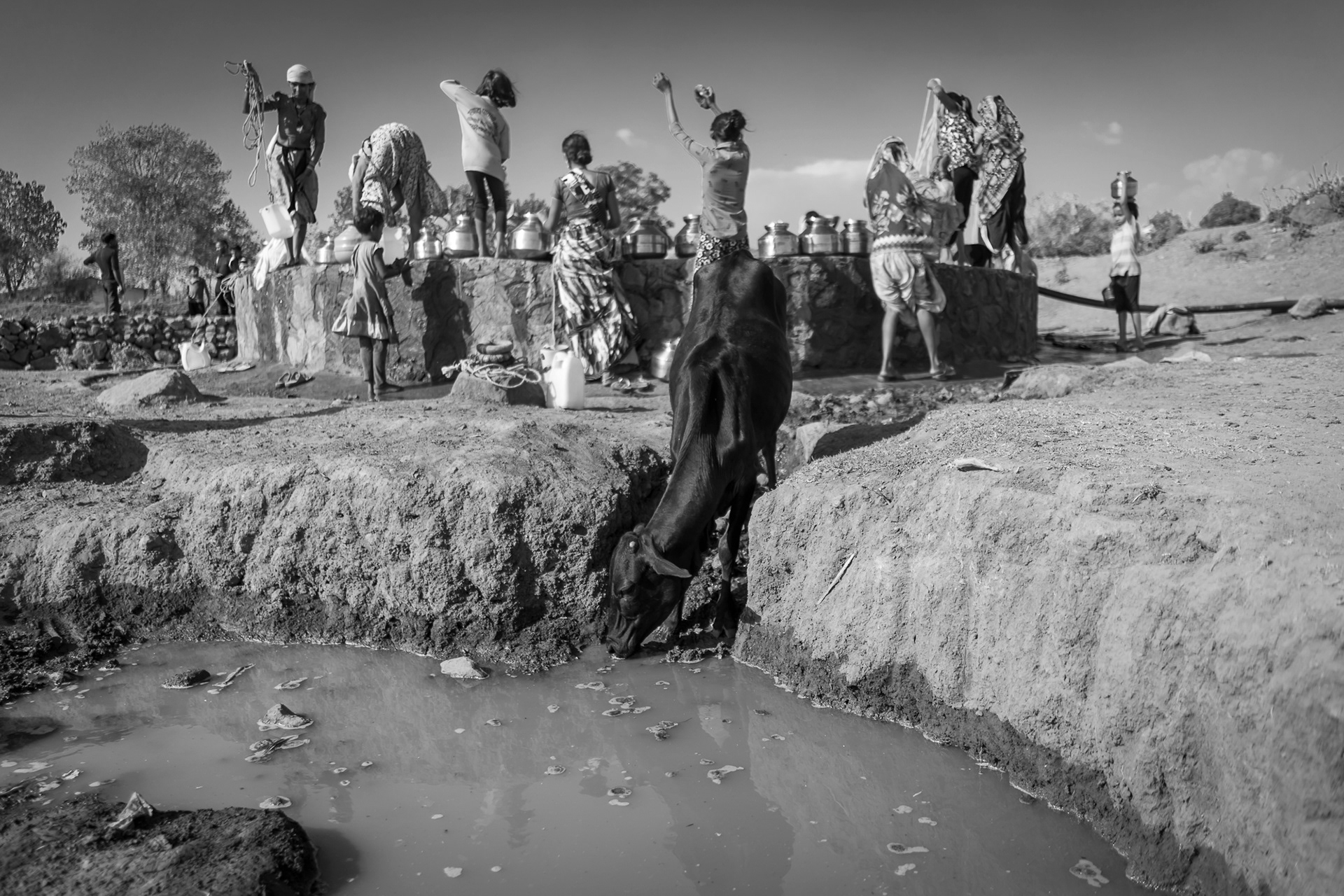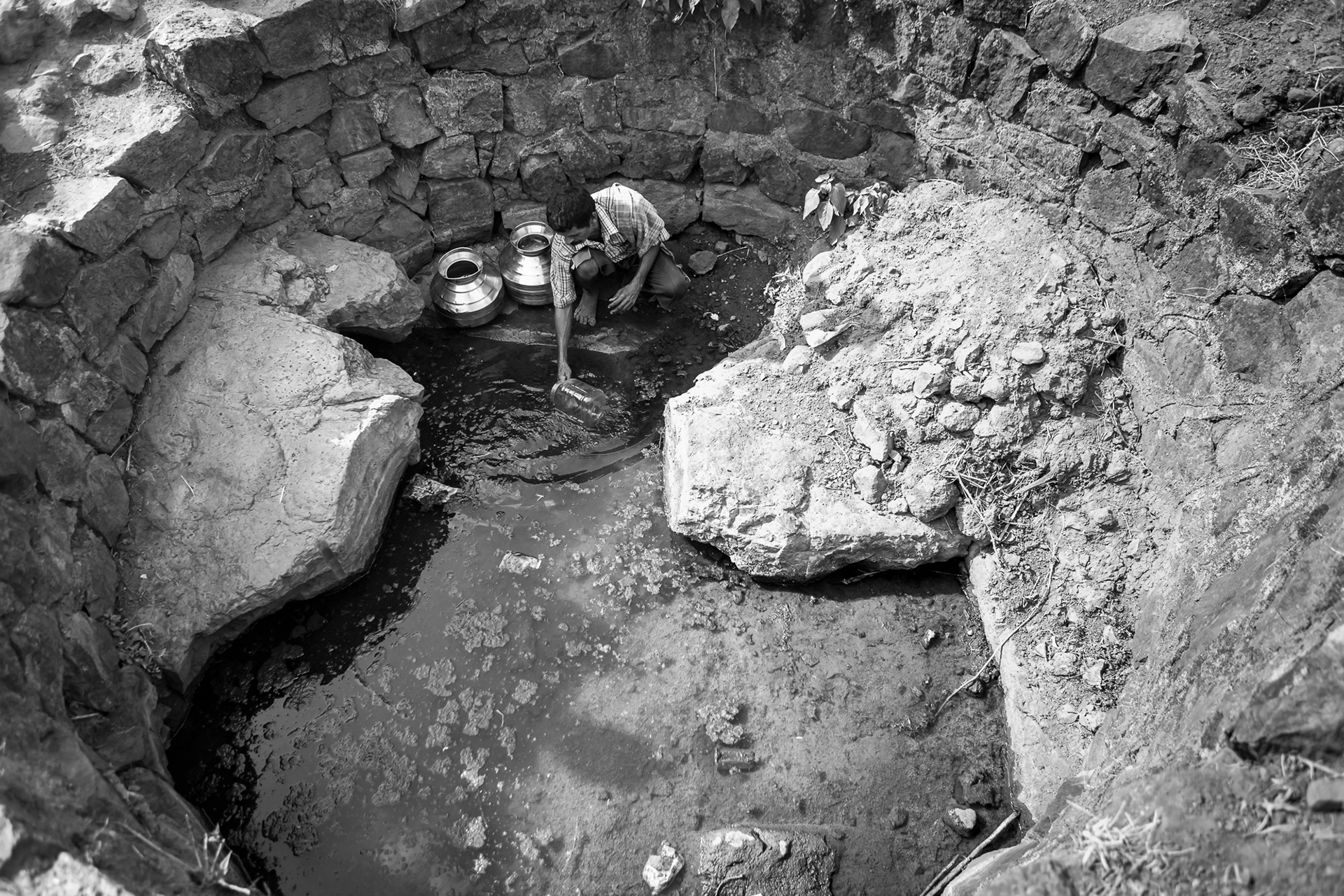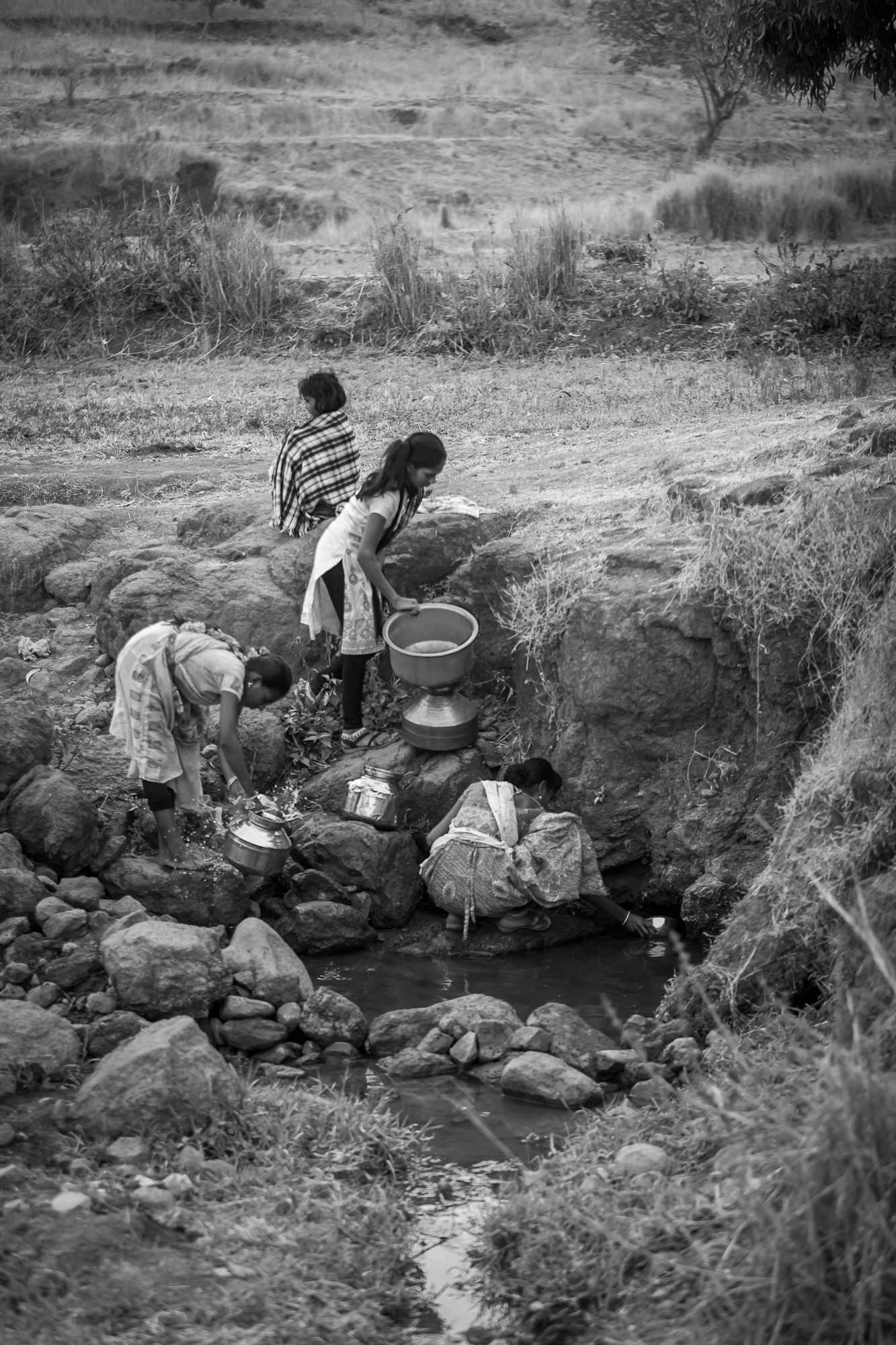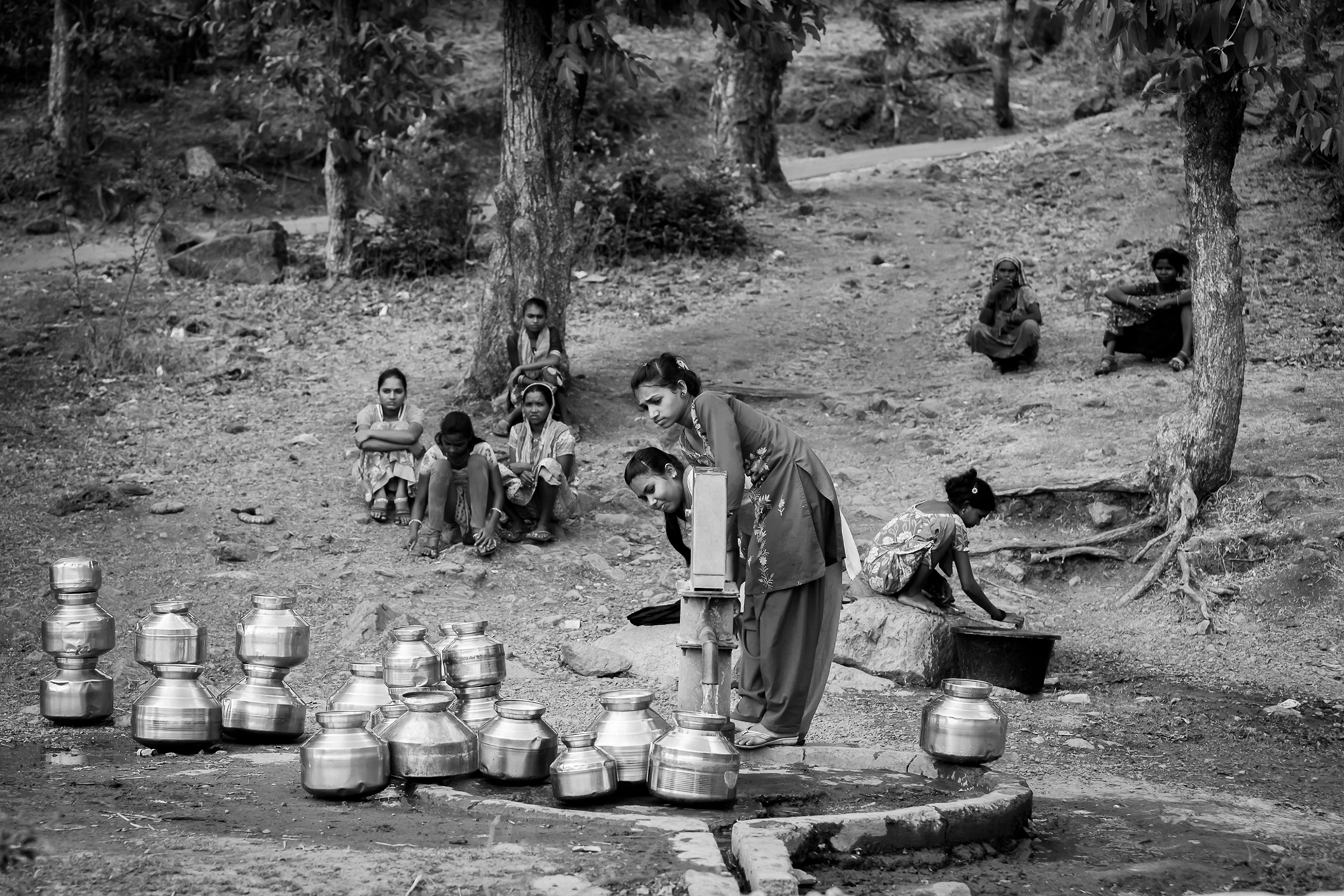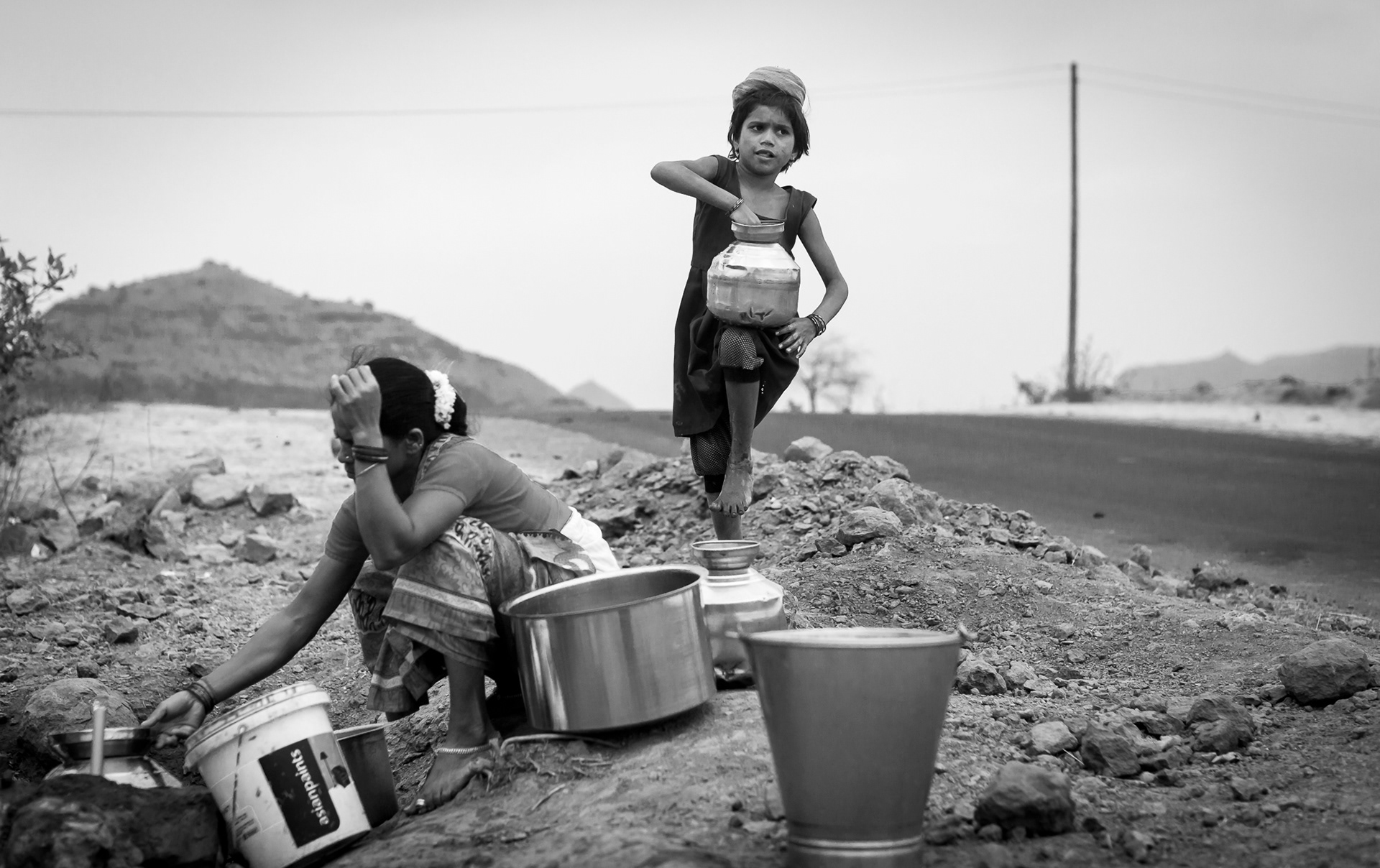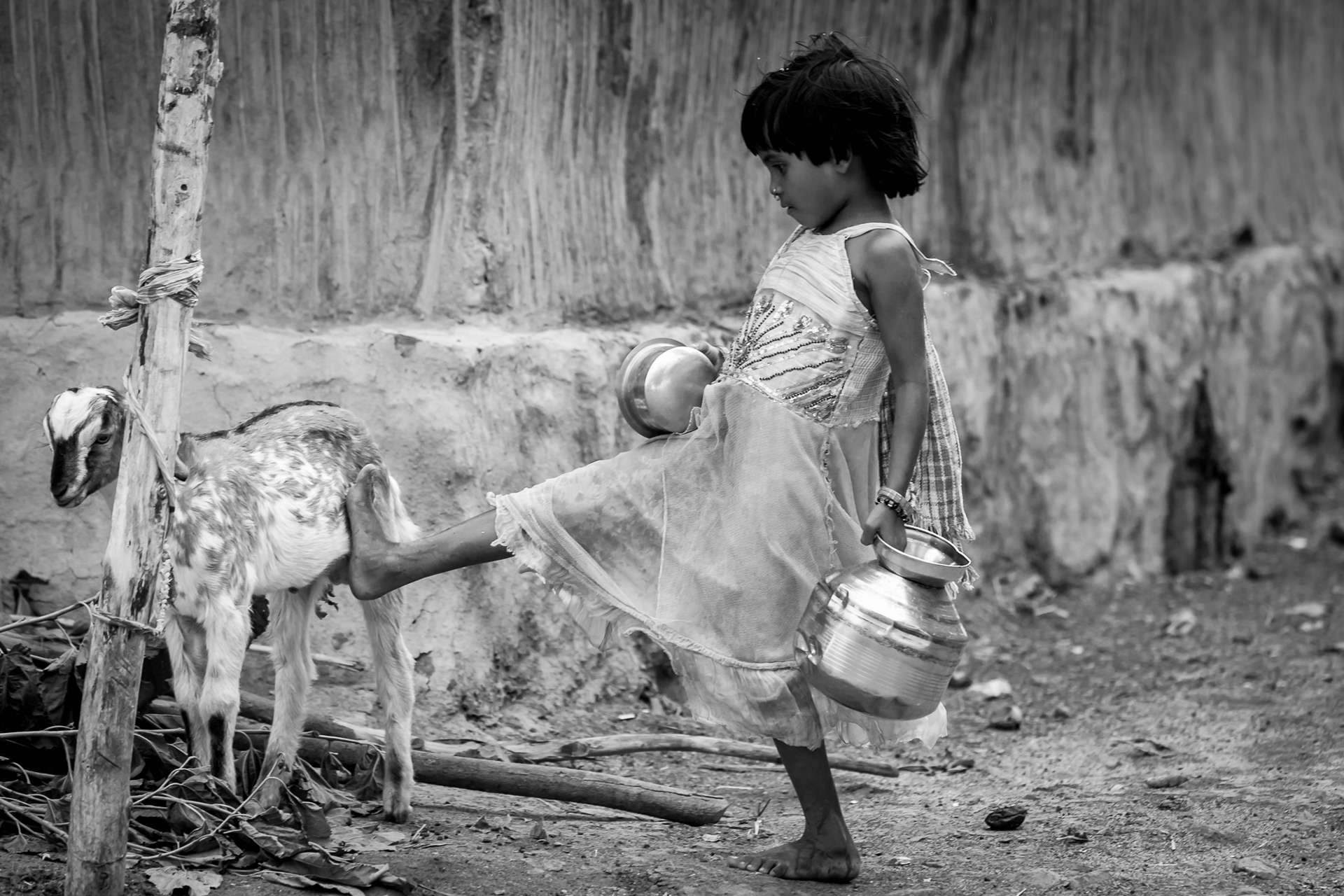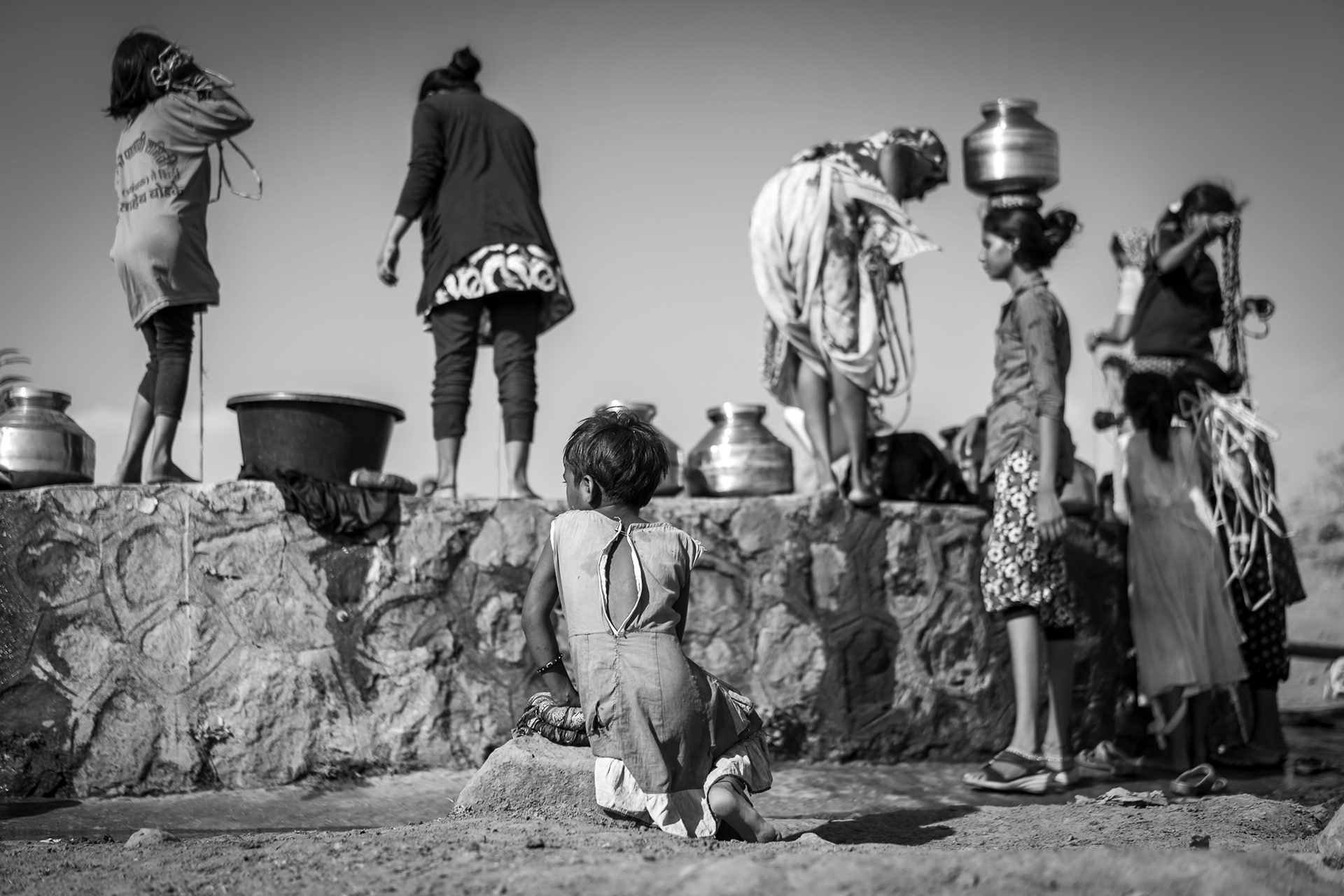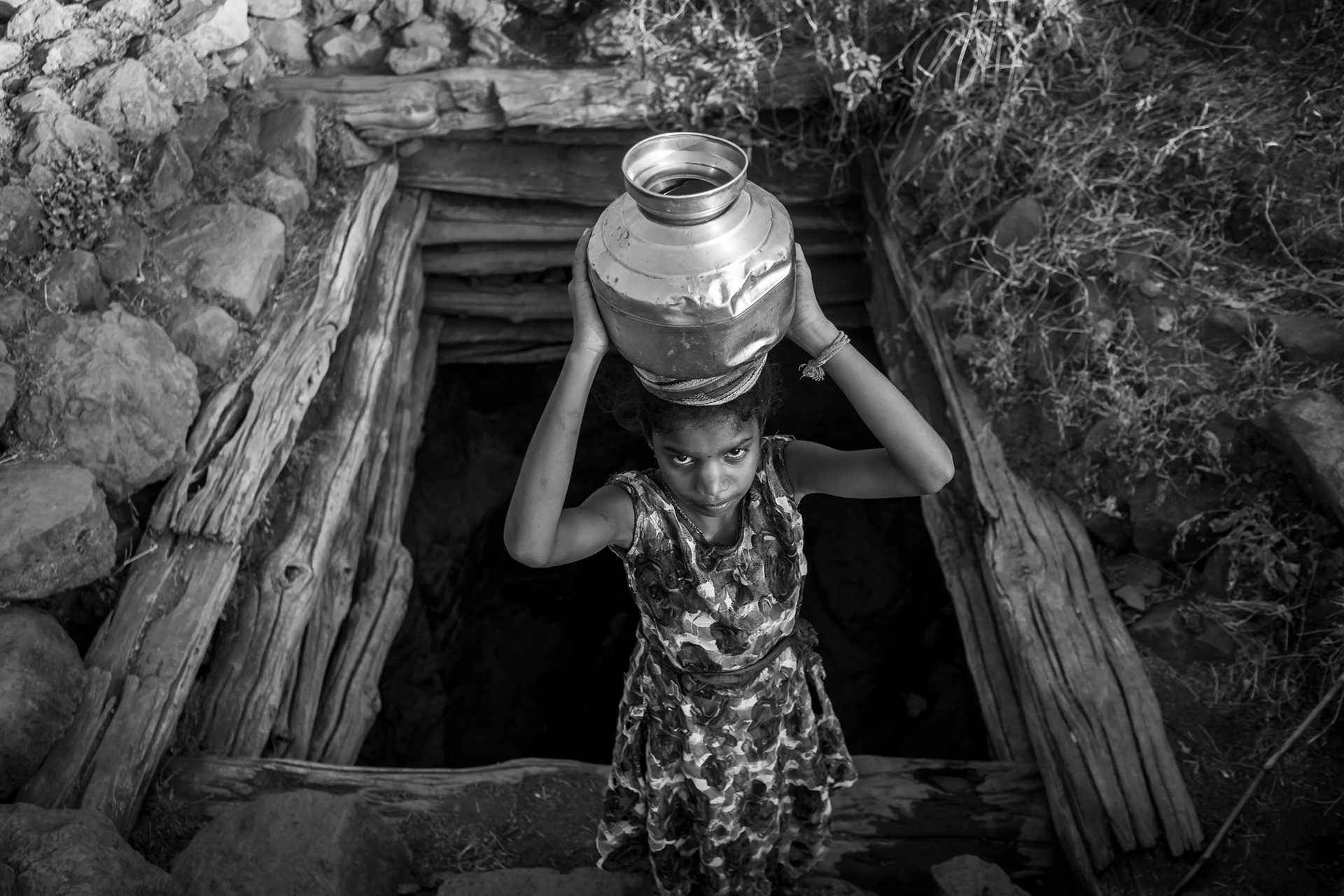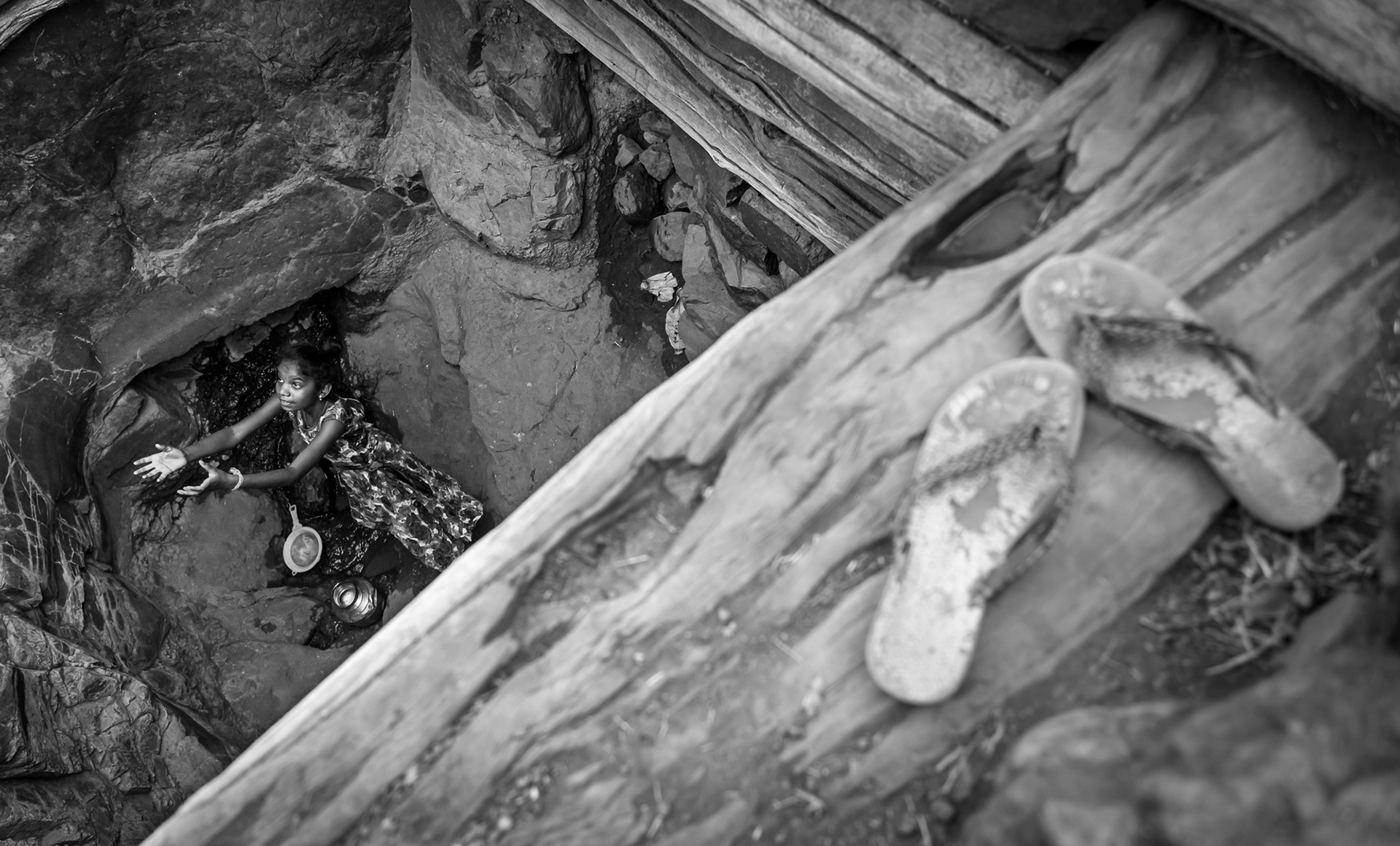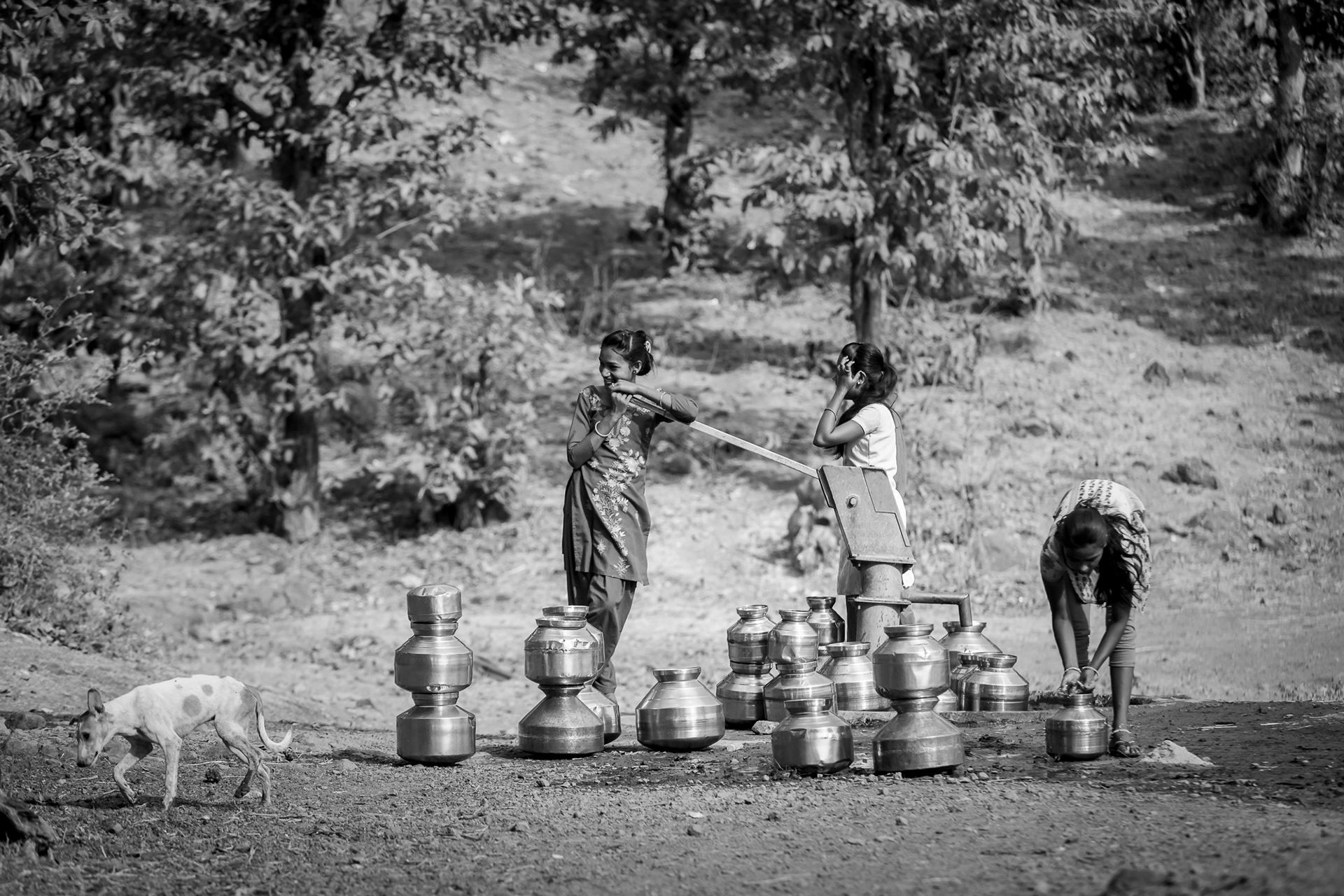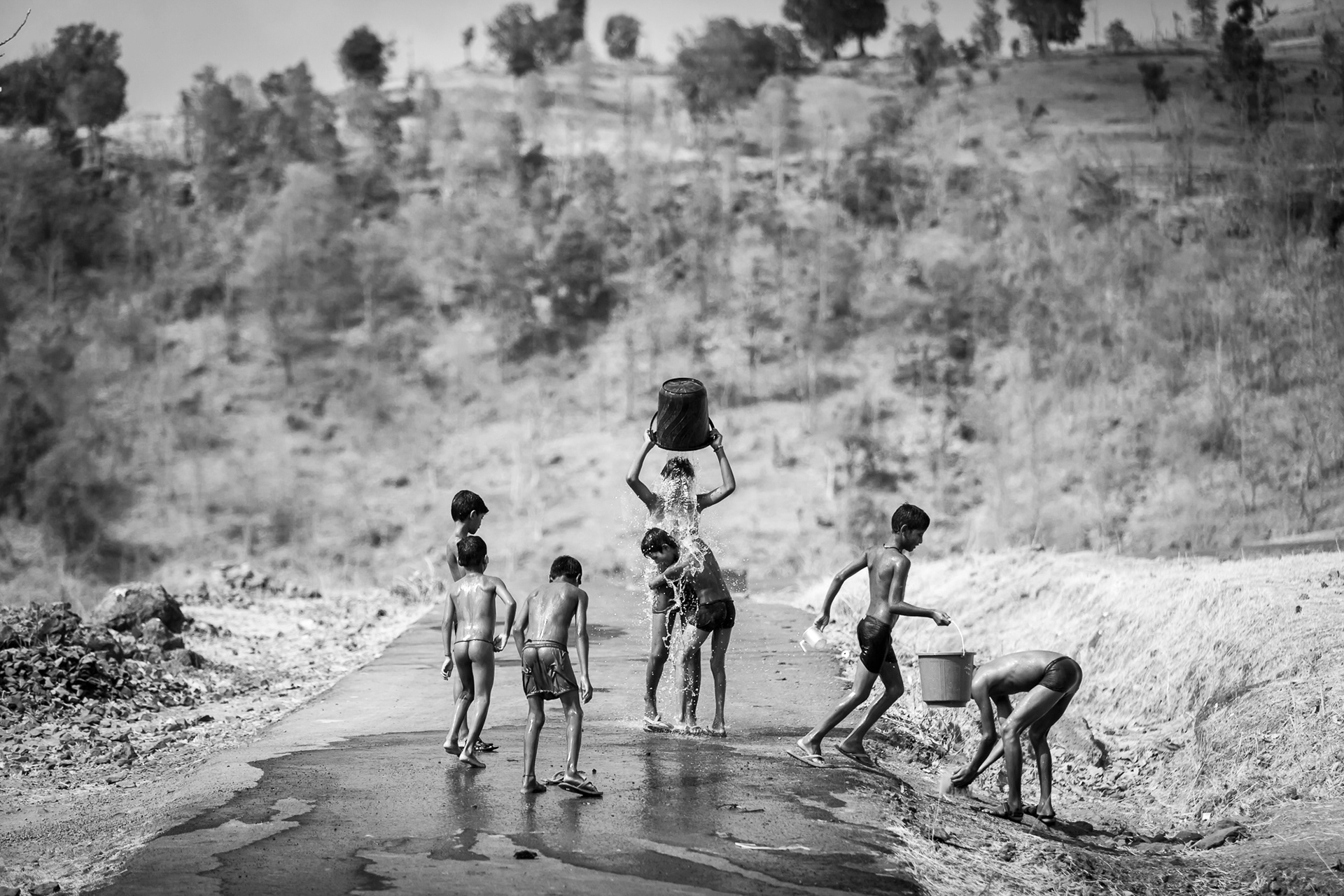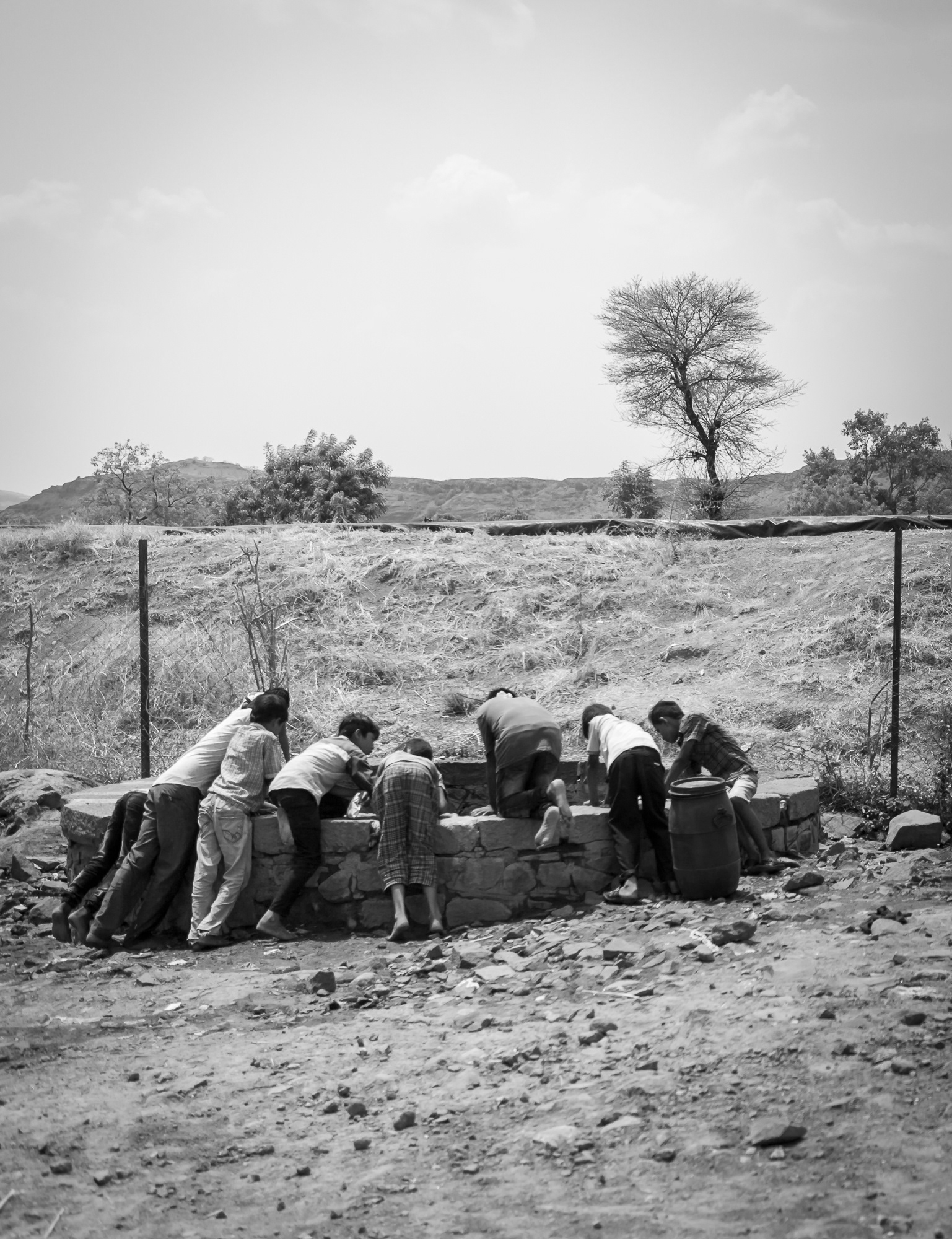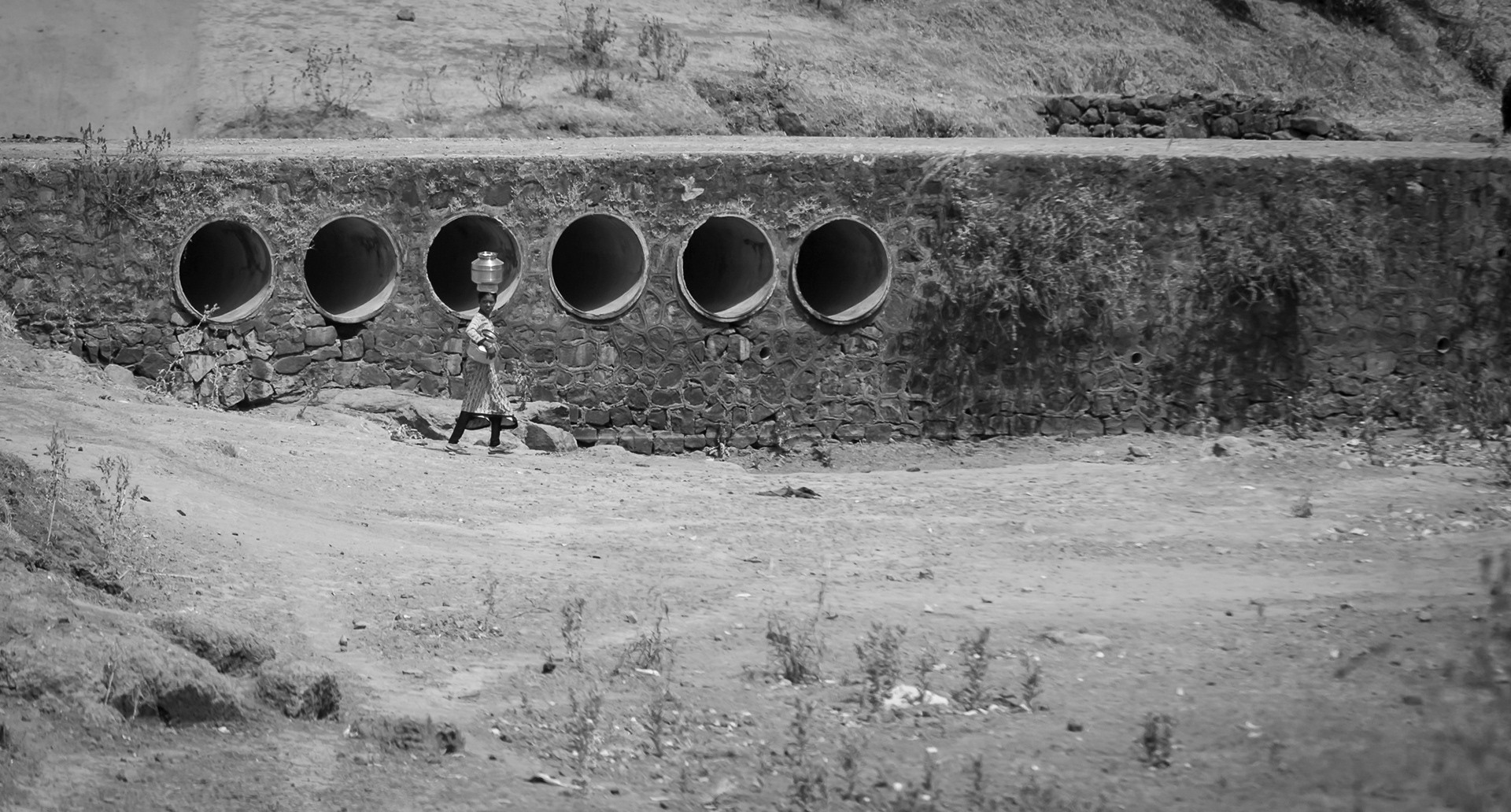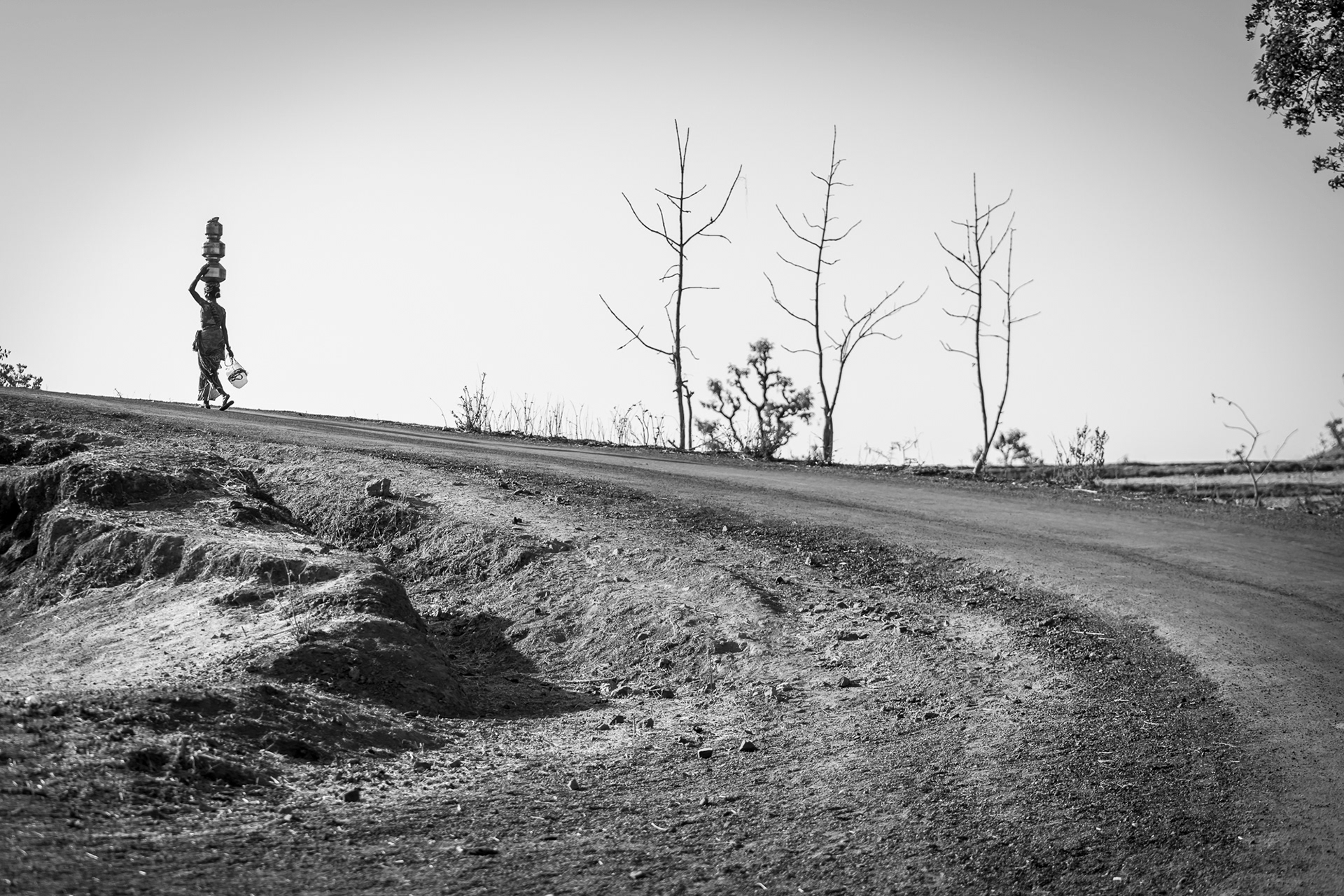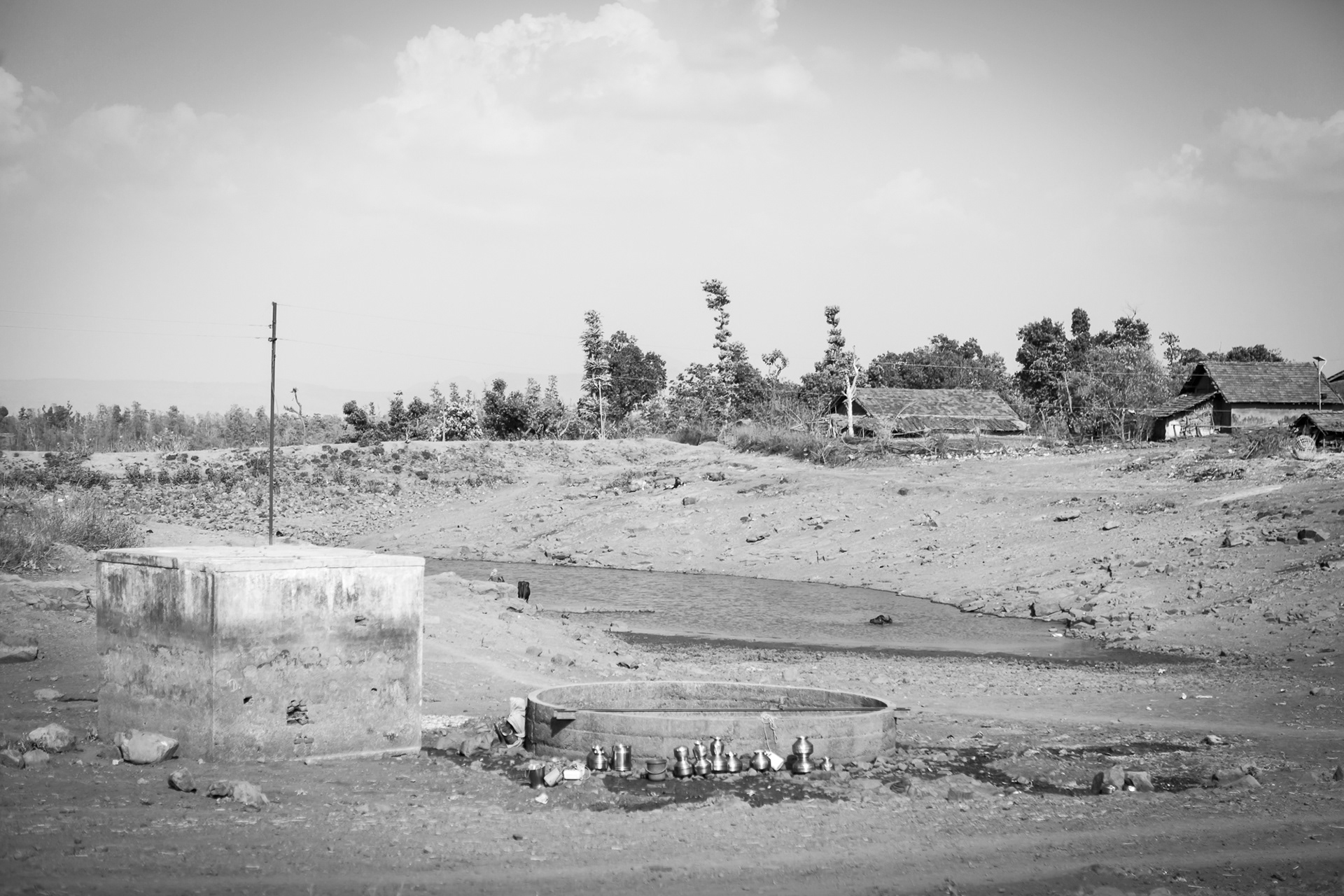
This series documents the everyday realities of water scarcity in remote tribal and farming villages across Palghar and Nashik districts in Maharashtra. Photographed during the summers of 2019 and 2020 while I was working with Outlook Magazine, the project follows women, children, and farmers as they negotiate long walks to dry wells, wait for water tankers, ration dwindling supplies, and draw contaminated water from dwindling natural sources.
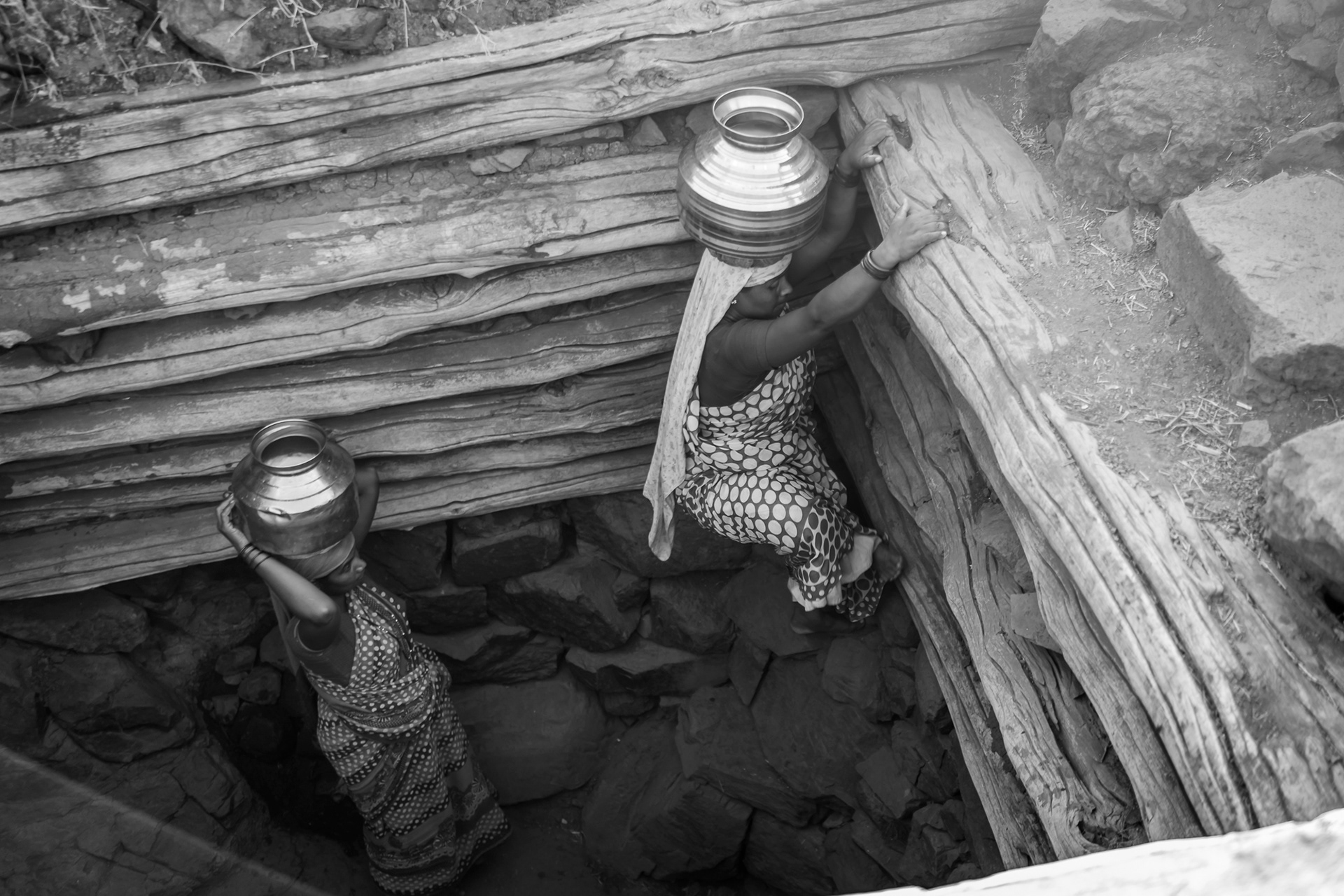
Rather than focusing on spectacle, the work looks closely at routine survival—children carrying pots before school, families planning how to divide the last remaining buckets, livestock dependent on emergency relief camps, and women descending into collapsing wells in forested terrain. These moments reveal how climate stress, failing infrastructure, and geography intersect in everyday life.
The photographs were made over repeated visits, allowing time for trust and observation, and aiming to present an intimate, unembellished account of communities living with prolonged drought.
Together, they form a visual record of resilience, vulnerability, and quiet endurance in regions where access to safe water has become an ongoing struggle rather than a temporary crisis.
Rather than focusing on spectacle, the work looks closely at routine survival—children carrying pots before school, families planning how to divide the last remaining buckets, livestock dependent on emergency relief camps, and women descending into collapsing wells in forested terrain. These moments reveal how climate stress, failing infrastructure, and geography intersect in everyday life.
The photographs were made over repeated visits, allowing time for trust and observation, and aiming to present an intimate, unembellished account of communities living with prolonged drought.
Together, they form a visual record of resilience, vulnerability, and quiet endurance in regions where access to safe water has become an ongoing struggle rather than a temporary crisis.
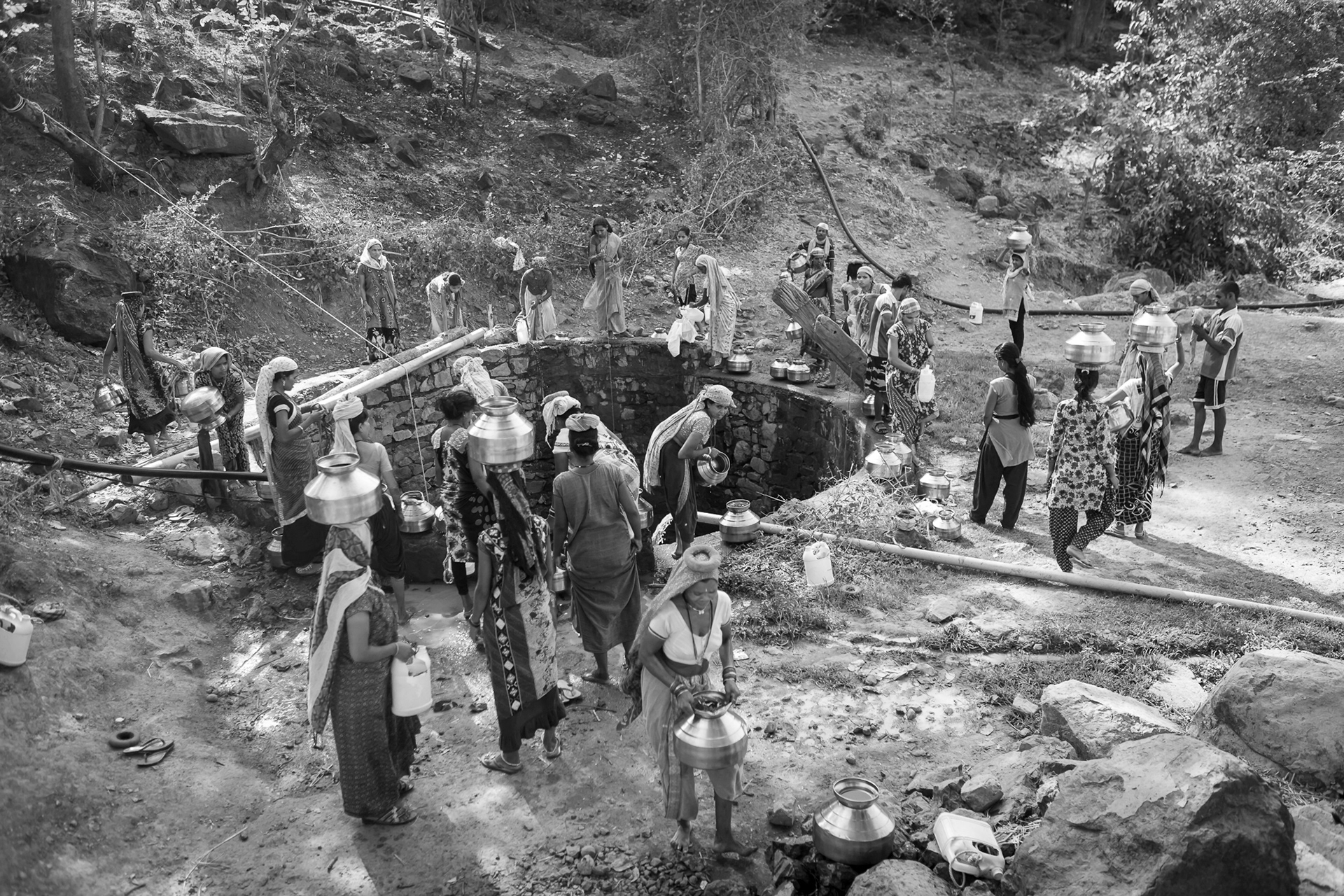
INSIDE FOREST NEAR PETH IN NASHIK DISTRICT